
Pre-order Cence HV, our fault-managed power system here


TECHNOLOGY |
DC Power distribution |
CONNECTED DEVICES |
LED lighting, Emergency Power Supply System (EPSS) |
CENCE PRODUCTS |
Cence LV Hub centralized Class 2 low-voltage DC power distribution for lighting |
CLIENT |
Kaiser Permanente Riverside Medical Center |
LOCATION |
Riverside, California |
DEPLOYED IN |
Summer of 2026 |
SAVINGS SUMMARY |
CapEx: Projected ~50%, OpEx: Projected ~43% |
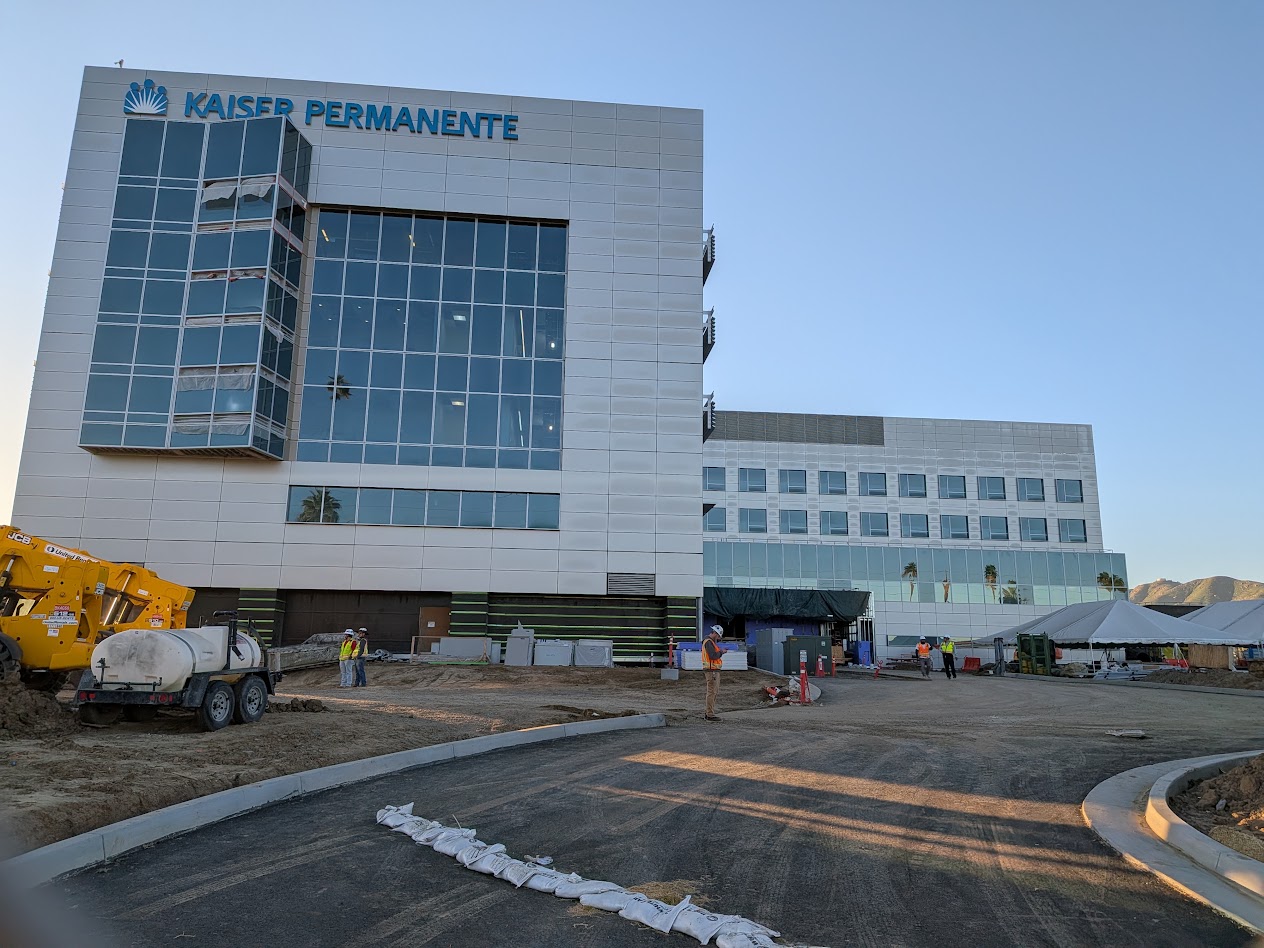
Kaiser Permanente’s environmental record goes back to its founder. By 1959, Kaiser Steel had built $5 million worth of air pollution control equipment at its Fontana, California mill. In 2016 the organization pledged to become carbon neutral by 2020, and it reached that goal in 2020. It has since committed to cutting its greenhouse gas emissions by 50% by 2030 and reaching net-zero emissions by 2050.
Riverside Medical Center is an existing Kaiser Permanente medical center, and the new bed tower is a part of a major expansion of its campus. According to the City of Riverside’s environmental review record, the expansion adds a five-story hospital tower with 152 new beds, responding to the need for more adult and neonatal intensive care unit beds, more operating room and interventional radiology capacity, and more efficient emergency department and clinical services.
The Riverside bed tower is an expansion of an existing medical center, not a standalone building on an empty site. Inside the tower, lighting supports care around the clock in emergency, surgical, and neonatal areas.
Maintenance is hard in a hospital. Independent engineers at Salas O’Brien note that while LED sources can last 20 years or more, their drivers often fail within 7 to 10 years. Picture a failed AC-to-DC driver in a conventional design. The driver sits in the ceiling, so fixing it means getting a ladder into a corridor or operating room, opening the ceiling, and working over an occupied clinical space. In a hospital, that is slow, disruptive, and difficult to schedule around patient care.
The wiring adds cost and carbon. A five-story tower needs a large amount of branch wiring, and traditional AC lighting circuits require metal conduit and junction boxes throughout. That adds material cost, installation labor, and trade coordination, and the conduit carries embodied carbon, which is relevant to an owner working toward net-zero emissions by 2050.
Cence Power’s LV Hub handles lighting power for the tower differently from a conventional AC design. Power is converted from AC to DC at the Hub, and the LED fixtures are fed low-voltage DC over Class 2 rated cabling. The system is compliant with NEC and CEC standards. Under NEC Article 725, Class 2 circuits are not required to be installed in a raceway such as conduit, subject to the authority having jurisdiction (AHJ).
Three things change as a result:
Emergency power
Lighting hubs serving emergency circuits are fed from the hospital’s Emergency Power Supply System (EPSS), so those fixtures stay powered during a utility outage.
Lorem ipsum dolor sit amet, consectetur adipiscing elit, sed do eiusmod tempor incididunt ut labore et dolore magna aliqua. Ut enim ad minim veniam, quis nostrud exercitation ullamco laboris nisi ut aliquip ex ea commodo consequat. Duis aute irure dolor in reprehenderit in voluptate velit esse cillum dolore eu fugiat nulla pariatur.
Block quote
Ordered list
Unordered list
Bold text
Emphasis
Superscript
Subscript

These are projected outcomes based on Cence’s typical LV Hub performance ranges.
Easier maintenance
Simpler installation
Fewer replacements
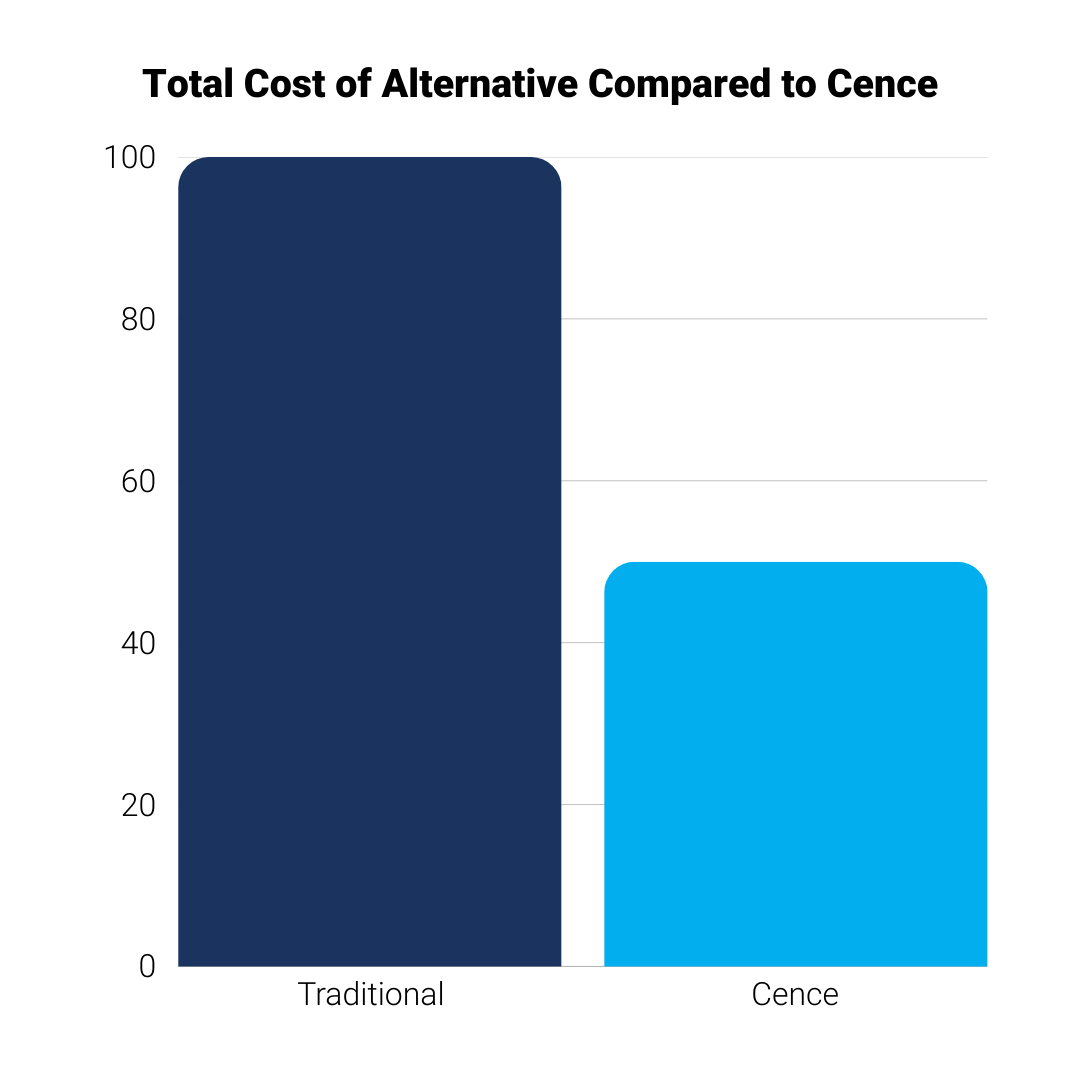
Capital Cost Impact (Projected)
The Riverside tower uses a centralized low-voltage DC architecture that takes conduit and junction boxes out of the lighting scope.
Projected benefits include:

Operating Cost Impact (Projected)
Hospital lighting runs around the clock, so the cost of servicing it matters as much as the energy it uses.
Kaiser Permanente Riverside is expected to benefit from:
Frequently Asked Questions
What lighting power system is used in the Kaiser Permanente Riverside bed tower?
The tower’s lighting is powered by Cence Power’s LV Hub, a centralized Class 2 low-voltage DC power distribution system. The hub converts AC power to DC in one place and delivers low-voltage DC to the LED fixtures, instead of using an AC-to-DC driver in every fixture.
Explore how a similar low-voltage DC lighting approach was implemented at Kaiser Permanente Roseville, or see our hospital LED lighting solutions.


