Pre-order Cence HV, our fault-managed power system here

Pre-order Cence HV, our fault-managed power system here
Lighting Designers
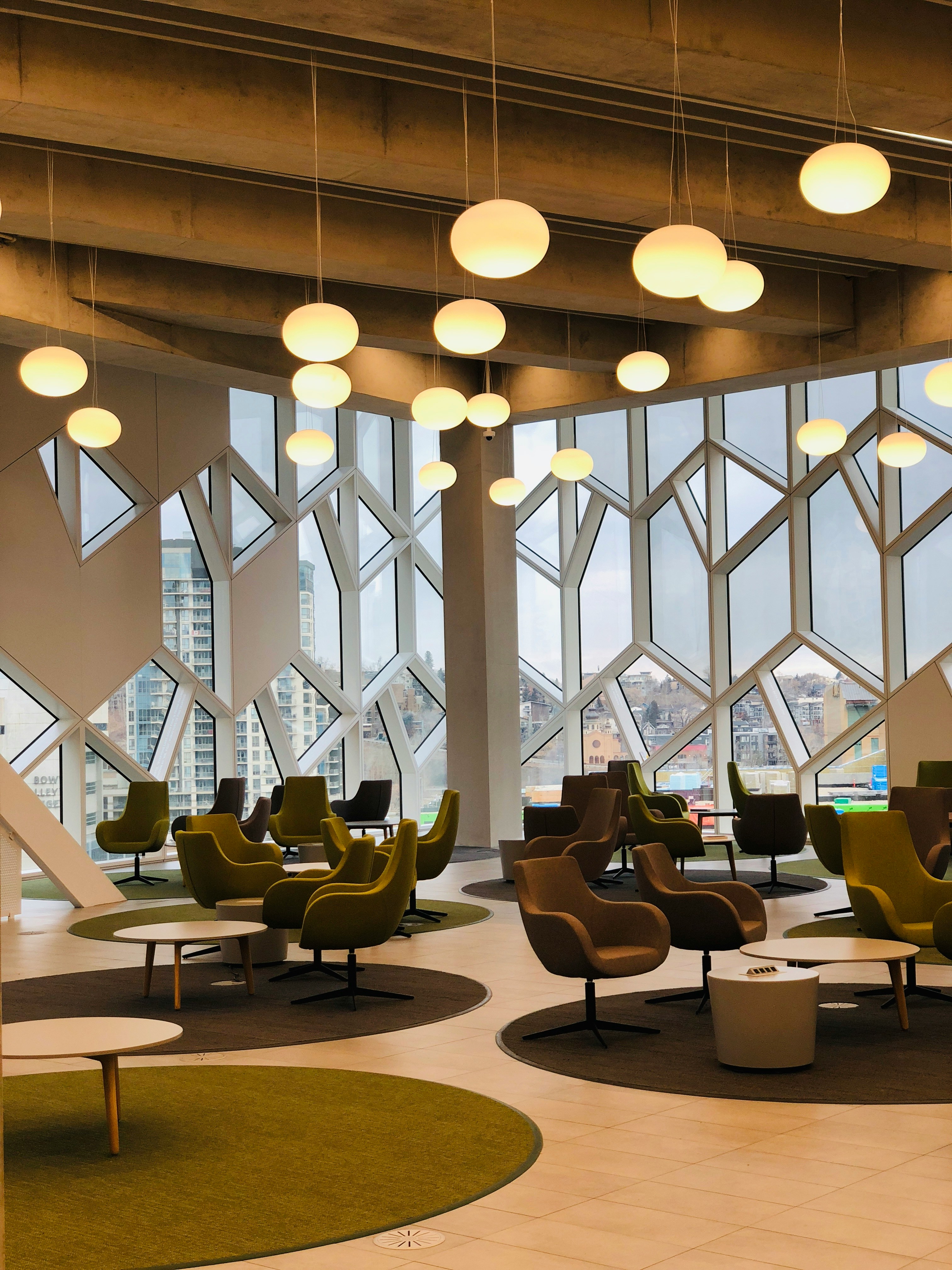
Move power conversion out of the ceiling while supporting compatible architectural luminaires, low-end dimming, and flexible controls.
Cence · Lighting Designers
What Centralized DC Power Unlocks for Designers
When every fixture needs its own driver, junction box, and line-voltage pathway, the ceiling becomes a coordination problem before the lighting vision is even installed. Cence centralizes power conversion away from the ceiling, helping reduce plenum clutter and giving designers more room to execute ultra-shallow reveals, concealed linear details, tight millwork, and clean architectural finishes.
Human eyes perceive light logarithmically, meaning a standard 1% dimming level still looks surprisingly bright. Cence delivers true mathematical 0.1% dimming, dropping physical light output low enough to achieve genuine low-light moodiness without flicker or color shifts.
Design Priorities
Every project balances aesthetics, performance, compliance, and sustainability. Explore the priorities that matter most to your design.
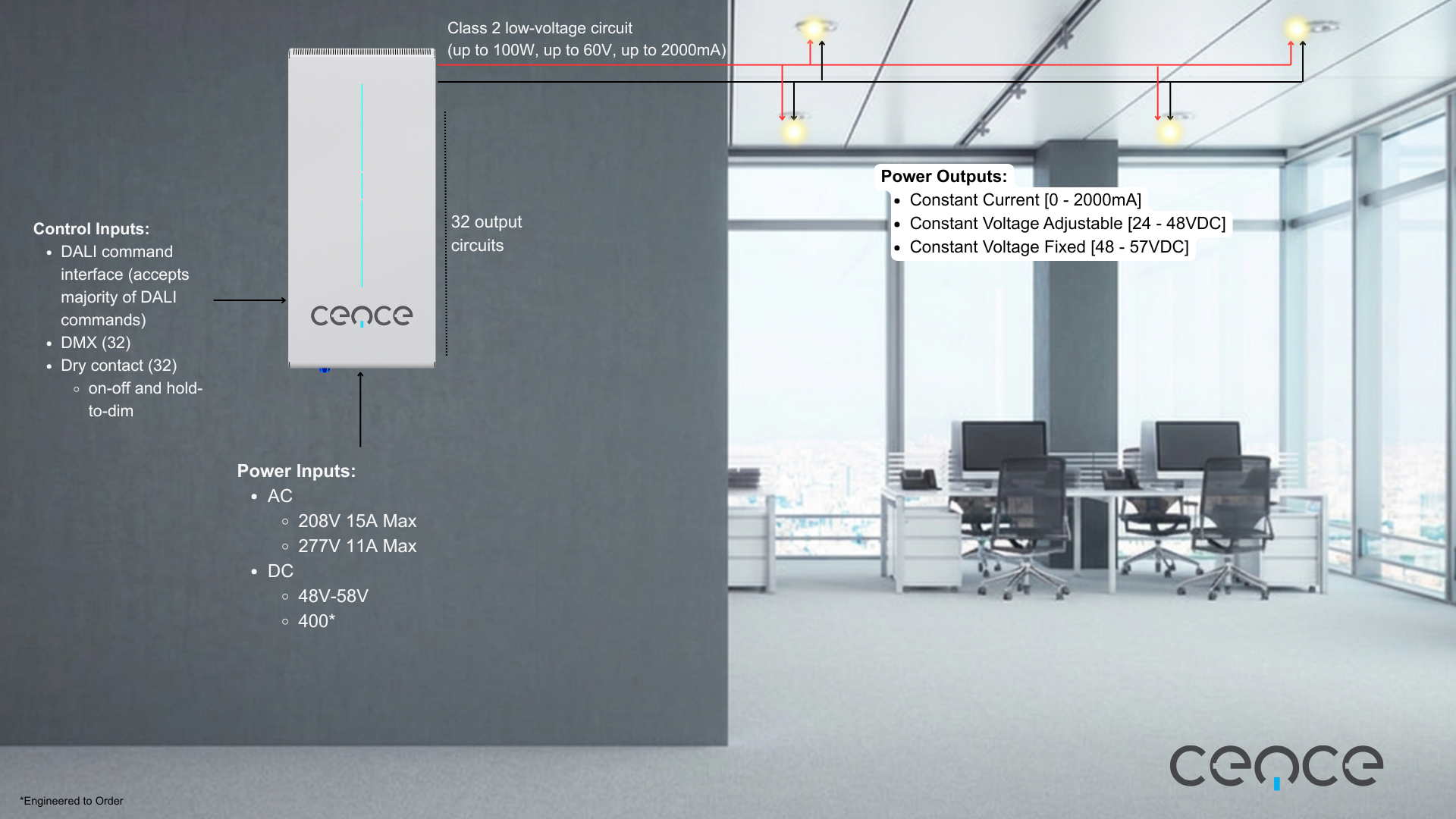
System Integration Mapping
Actual system configuration, output levels, and code compliance depend on the approved design and listed system limits for each project.
Sustainability
It shifts the power conversion hardware out of sight. By delivering clean Class 2 DC power directly to architectural fixtures, the need for visible junction box covers, bulky transformers, and driver access hatches in the ceiling is eliminated. Designers gain total aesthetic control, ensuring acoustic panels, wood baffles, and custom plaster ceilings remain uncluttered and visually pure.
While standard low-voltage systems suffer from severe voltage drop over extended distances, Cence resolves this constraint through patented digital line regulation technology. By dynamically monitoring and regulating electrical parameters across the run, Cence maintains uniform power levels and consistent light output across long commercial circuits without forcing designers to specify oversized copper wire gauges.
Because Cence Power distribution line operates strictly within safe Class 2 low-voltage thresholds, it does not require rigid metal conduits or bulky J-boxes at every fixture interface. This drastically reduces physical hardware volume in the plenum, allowing designers to execute ultra-shallow ceiling clearances, razor-thin drywall reveals, and tight millwork integrations impossible with traditional line-voltage wiring.
PoE introduces significant friction for commercial lighting since it has strict 100-meter cable distance caps, expensive IT port costs, and messy thermal cable bundling. Cence avoids that friction without forcing you to plan an expensive IT infrastructure.
Driver failure is the number one point of maintenance for LED lighting. In traditional setups, servicing a failed driver requires ladders and open ceiling panels. With Cence, facilities teams (subject to local code and AHJ approval) can simply hot-swap modular power components in seconds inside the electrical room.
Yes. Cence is installed in healthcare environments where power, reliability, strict low-flicker performance, and minimal operational disruption are essential. Centralizing power conversion in utility rooms allows healthcare facilities to service lighting infrastructure without entering sterile patient areas, surgical suites, or cleanrooms.
Yes, national retail brands and commercial real estate developers utilize Cence to power accent lighting and decorative lighting.
Yes, educational institutions deploy Cence Class 2 low-voltage DC power across campus facilities and research hubs to achieve modern architectural and operational goals. Centralizing power conversion in the utility room allows university spaces to execute a clean open ceiling design by eliminating conduits, junction boxes, and bulky AC drivers from occupied areas.
Cence supports sustainable lighting specifications by streamlining low-voltage power distribution. It eliminates individual aluminum driver housings, steel junction boxes, and heavy conduits at each fixture point, reducing raw materials across the ceiling plane, while also removing 10%–18% AC-to-DC conversion heat loss in the plenum to reduce overall building energy consumption.
Get a project-specific assessment of dimming, cleanliness, and compliance gains.
Get a custom assessmentRegulatory & Compliance Note: System capabilities, performance metrics, plenum wiring configurations, trade boundaries, and emergency egress routing are subject to compatible luminaires, listed system configurations, local electrical codes, and AHJ (Authority Having Jurisdiction) approval.


