Pre-order Cence HV, our fault-managed power system here

Pre-order Cence HV, our fault-managed power system here

Retail
Centralizing your low-voltage DC power for your lighting infrastructure simplifies maintenance, lowers operational costs, and prevents sales floor disruptions during service hours.
Cence · Retail
Clean DC power distribution
Cence simplifies system maintenance while supporting custom decorative lighting designs across commercial lighting applications. Modern retail properties require high energy efficiency and absolute electrical safety. As spaces increasingly integrate complex, large-scale decorative LED fixtures, the need for a dedicated low-voltage DC power infrastructure becomes clear.
Integrating a centralized, low-voltage DC power system directly into the building design answers this requirement. By establishing a centralized low-voltage DC power source for the LEDs, the system gives specifiers, engineers, and building owners a verified method to eliminate localized conversion losses and significantly lower the total cost of ownership for decorative lighting assets.
Class 2 DC power is inherently current limited to UL 1310 levels. This ensures that all lighting-related wiring stays below hazardous thresholds, eliminating high-voltage electrical risks from the retail floor and customer-facing areas.
Centralizing low-voltage power distribution eliminates the code requirement for rigid metal conduit and specialized junction boxes at every fixture connection point. Running current-limited Class 2 circuits directly to decorative fixtures allows contractors to route lightweight, low-voltage wiring freely through open ceilings, walls and millwork.
Large decorative elements like suspended fixtures require remote power management to protect asset lifespans. Utilizing remote drivers for decorative blade lights moves failure-prone conversion components out of the ceiling and into a centralized backroom Hub. Facilities teams can service systems at eye level without using ladders or disrupting sales floor operations.
Centralized AC-to-DC power conversion reduces the total volume of individual conversion electronics and raw copper required across a property. This configuration lowers lighting-related embodied carbon by up to 8% to support corporate Net Zero and LEED targets.
The centralized Cence LV Hub removes the requirement to hide or mount individual line-voltage driver boxes inside drywall or open ceilings next to the lighting. By consolidating up to 8 hot-swappable power modules in a remote backroom or IT closet, the Hub functions as a centralized, remote driver system. It delivers regulated DC power through Class 2 low-voltage channels directly to the driverless decorative fixtures, allowing facilities teams to handle all component maintenance at eye level with zero impact on active customer areas.
Specifying the Cence system shifts the bulk of the lighting installation layout from high-voltage commercial electricians to low-voltage technicians. Licensed electricians are only required to mount the central LV hub and connect it to the primary AC sub-panel. From the hub outward to the decorative fixtures, the Class 2 wiring can be routed by low-voltage installers. This division lowers overall installation CapEx, reduces specialized labor hours on the construction schedule, and simplifies coordination between trades during the fit-out phase.
The Cence LV hub can power driverless emergency egress fixtures and exit signs by connecting directly to an upstream central emergency inverter system. During a utility power failure, the inverter supplies power to the input layer of the Cence Hub. The Hub then distributes this power through Class 2 low-voltage output circuits to the fixture-level emergency hardware, eliminating the need for individual localized battery packs at each emergency fixture point.
See how corporate banking branches and commercial retail stores are deploying Class 2 low-voltage DC power.

Centralized DC lighting power system reducing CapEx approximately 50% vs PoE and OpEx approximately 43% vs conventional AC LED at a retail banking branch.
Read the case study →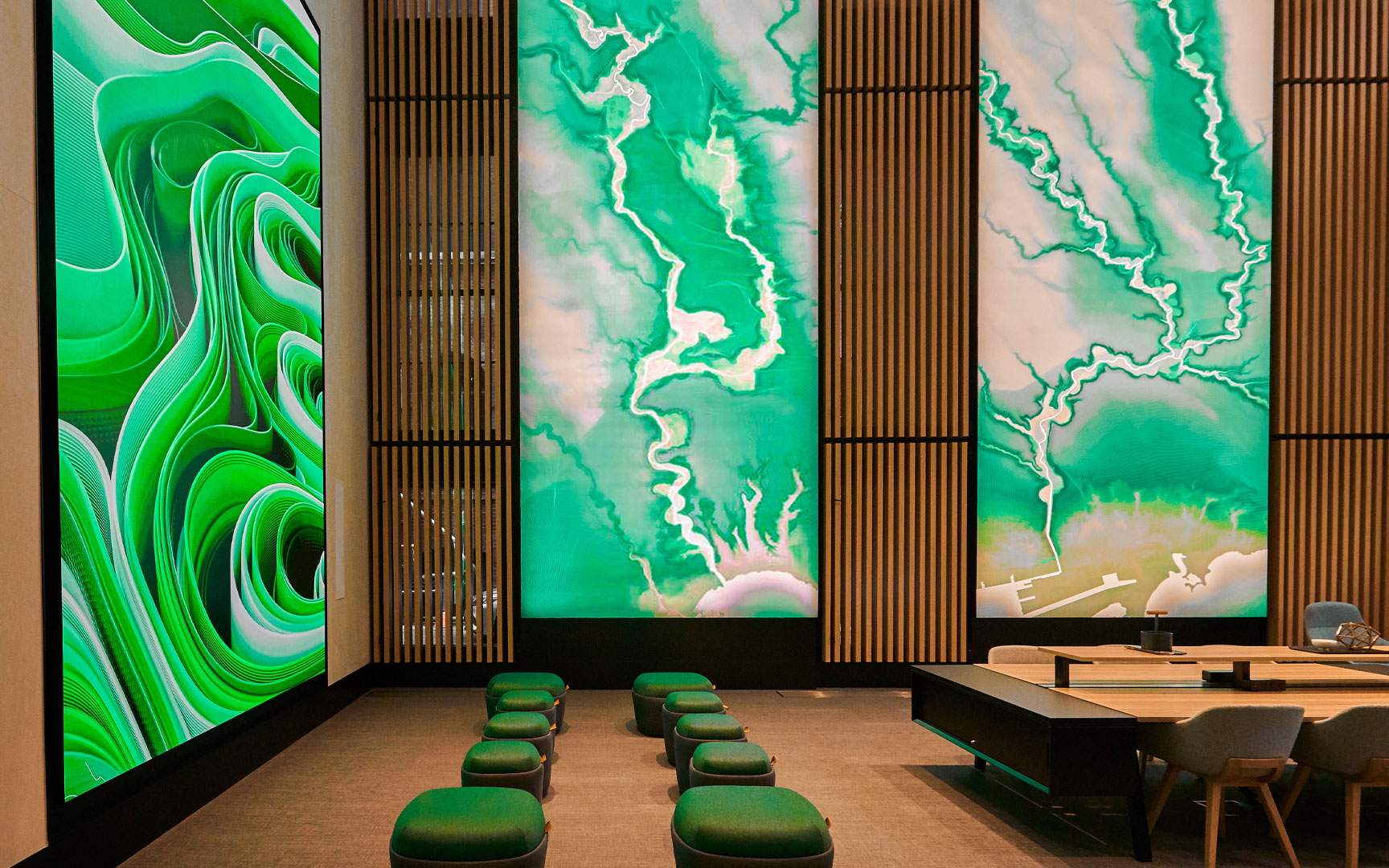
Low-voltage DC system powering TD's flagship TD Terrace branch. Conduit eliminated, centralized hubs outside plenum, LEED-aligned.
Read the case study →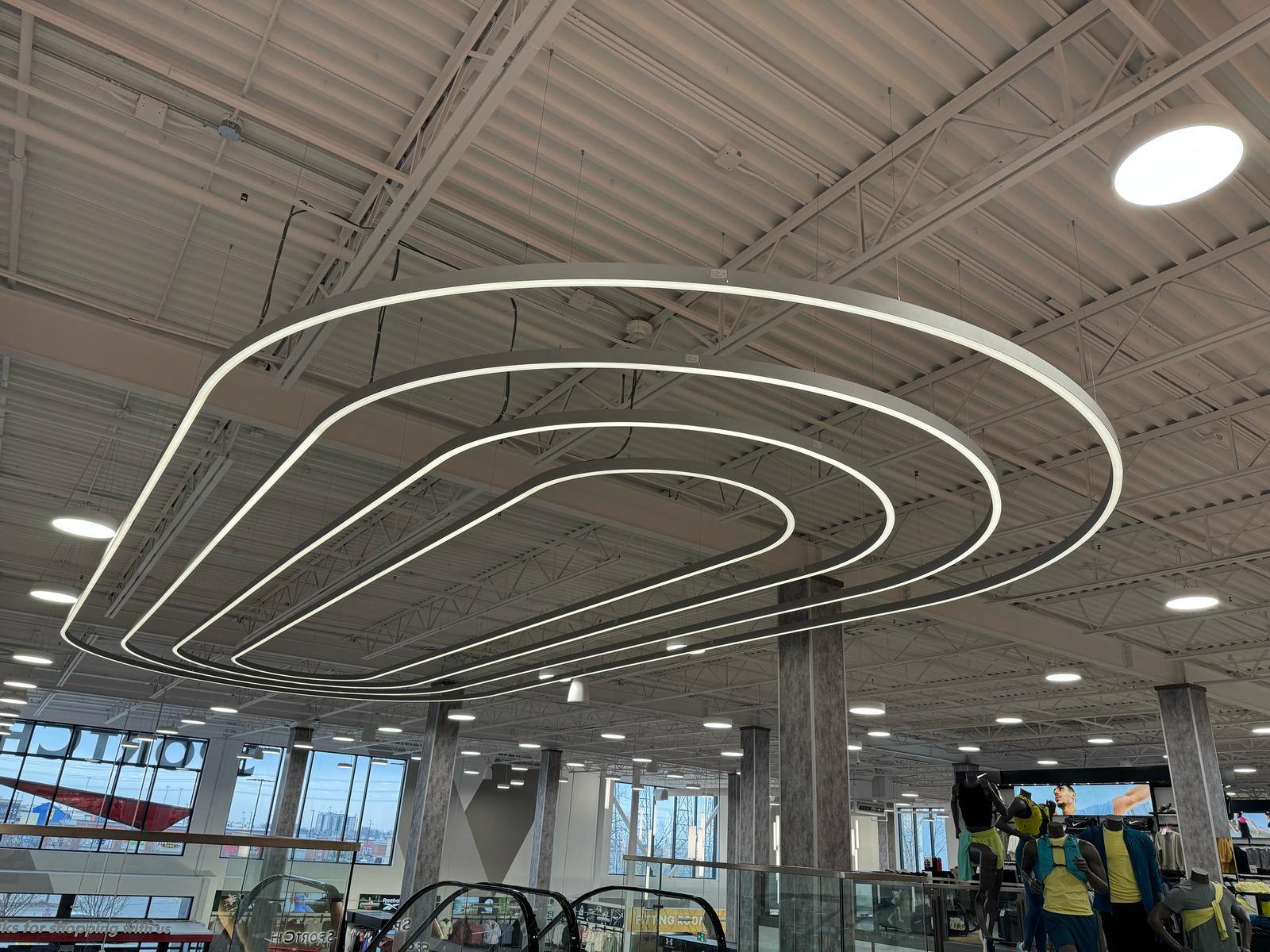
Class 2 low-voltage DC with centralized constant current hubs for modular linear suspension fixtures at four-story ceiling height. Ground-level maintenance, hot-swappable modules.
Read the case study →Get a project-specific CapEx and OpEx analysis for your next retail fit-out or renovation.
Request a Technical Consultation


