
Pre-order Cence HV, our fault-managed power system here


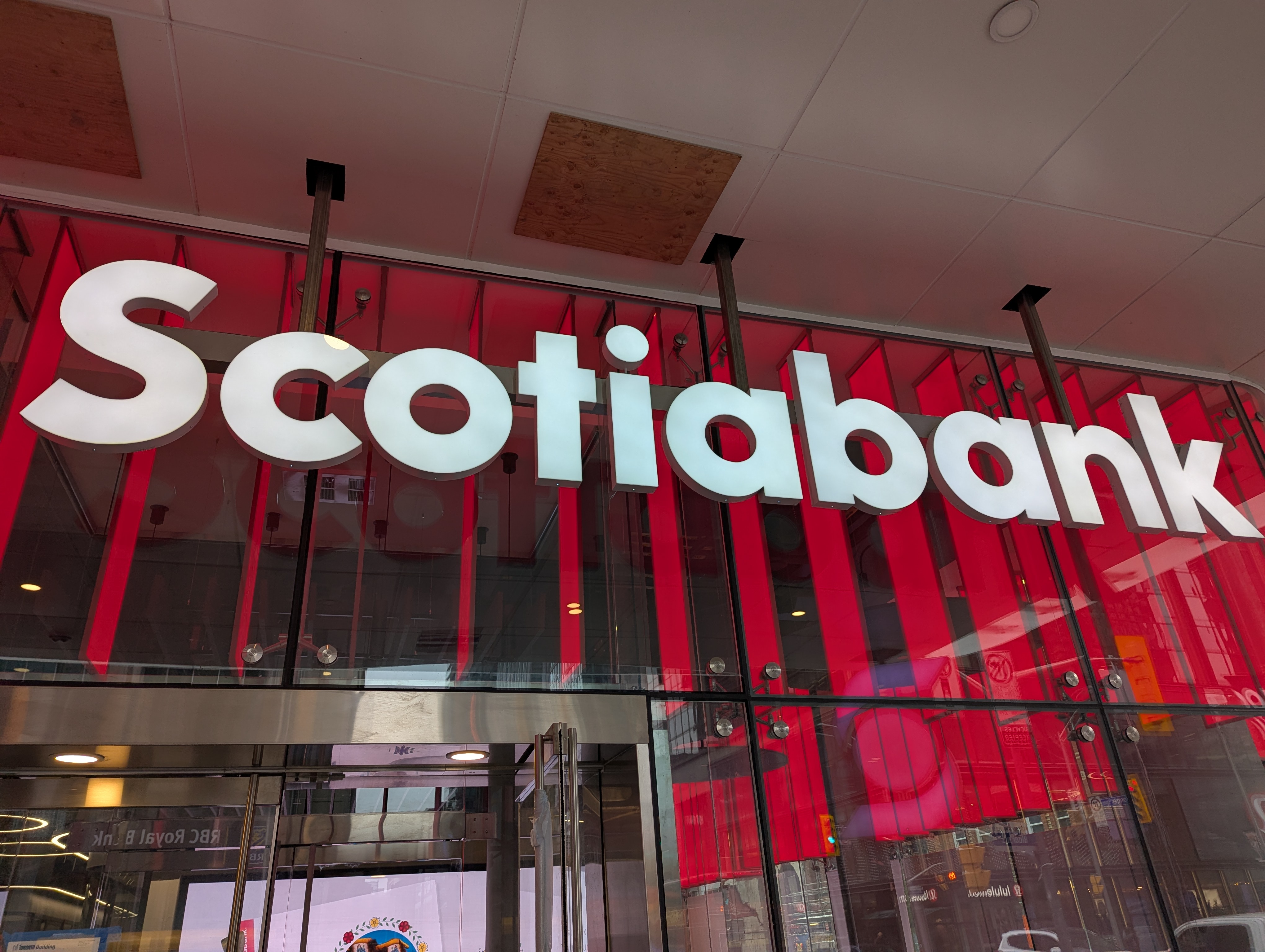
Scotiabank operates more than 950 branches across Canada, many of which function as customer-facing banking retail environments during regular business hours. For facilities teams, lighting systems are evaluated not only on performance and aesthetics, but also on how they support efficient operations and maintenance over time. At the Yonge and Bloor location, Scotiabank implemented a new lighting power system as part of an interior lighting deployment.
This created an opportunity to evaluate the lighting power architecture with a focus on service accessibility, component longevity, and lifecycle operating costs, rather than defaulting to a conventional AC lighting approach.
Reducing operational greenhouse gas emissions is a core part of Scotiabank’s ESG strategy, particularly across its retail branch network where lighting loads operate for extended hours. Achieving meaningful reductions in operational energy use and associated greenhouse gas emissions requires systems that also support lower long-term operating and maintenance costs.
At the Bloor Street branch, Scotiabank was evaluating new LED lighting for prominent customer-facing areas, including fixtures visible from the exterior. The lighting solution needed to deliver high visual quality while meeting strict energy performance expectations. Like all LED systems, the fixtures operate on direct current (DC), while the utility grid supplies alternating current (AC). In conventional installations, each fixture contains its own driver to convert AC to DC, an approach that introduces conversion losses and additional heat at every luminaire.
Scotiabank sought an electrical system that could supply DC power more efficiently at the system level, reducing energy losses associated with repeated AC to DC conversion. The solution was designed to deliver sustained reductions in energy use while supporting long-term operating performance over the building lifecycle.
Scotiabank partnered with Cence Power and Omnify Lighting to deliver a lighting system that aligned with these operational, energy, and ESG objectives.
Cence Power provided centralized DC power to support the LED lighting in the customer-facing banking areas.
The system is built around Cence LVDC, which centralizes AC to DC conversion in an accessible utility space rather than distributing drivers throughout the ceiling. Lighting circuits are powered by remote lighting modules housed in a Cence Hub.
Centralized power and accessible maintenance
Instead of placing drivers at each luminaire to convert Alternating Current (AC) to Direct Current (DC), power conversion and regulation occur at the central Cence Hub. This consolidates the electronics most likely to require service into a location that facilities staff can access without ladders, lifts, or ceiling disruption.
The lighting modules are hot-swappable. When a module requires replacement, it can be exchanged at the hub without shutting down adjacent lighting zones, subject to local authority having jurisdiction requirements.
Class 2 wiring for deep retrofit efficiency
Because the project involved replacing wiring infrastructure, the use of Class 2 low-voltage distribution had a material impact on installation cost and complexity.
Class 2 wiring eliminates the need for metal conduit and junction boxes at each fixture. Compared to replicating a traditional AC lighting layout, this reduced material requirements and installation labor while simplifying coordination in occupied areas.
Devices Connected to the Cence System
Omnify Lighting LED downlights and track fixtures are powered directly from the Cence LVDC system. Supplying regulated DC power at the system level eliminates the need for fixture-integrated AC to DC conversion.
By removing onboard drivers, thermal conditions within ceiling cavities are improved, supporting longer component life and reducing the likelihood of fixture-level failures.
Lorem ipsum dolor sit amet, consectetur adipiscing elit, sed do eiusmod tempor incididunt ut labore et dolore magna aliqua. Ut enim ad minim veniam, quis nostrud exercitation ullamco laboris nisi ut aliquip ex ea commodo consequat. Duis aute irure dolor in reprehenderit in voluptate velit esse cillum dolore eu fugiat nulla pariatur.
Block quote
Ordered list
Unordered list
Bold text
Emphasis
Superscript
Subscript

Maintenance occurs in utility spaces rather than ceilings
With centralized power modules located in an accessible utility closet, most lighting maintenance no longer requires ceiling access in customer-facing areas. Modules can be monitored, serviced, or replaced without ladders or lifts on the banking floor. This reduces disruption, lowers labor costs, and simplifies routine maintenance planning.
Improved alignment between advertised and practical LED lifespan
In conventional LED systems, driver failure often occurs well before LED degradation becomes an issue, typically in the 25,000 to 50,000 hour range. By relocating power electronics out of thermally constrained fixture housings, the LED arrays operate under more stable thermal conditions.
At the Bloor branch, this design approach supports projected operating lifetimes closer to manufacturer-rated ranges of 80,000 to 100,000 hours, with driver replacement handled centrally rather than at each fixture.
Reduced energy losses through centralized conversion
Centralizing AC to DC conversion reduces the cumulative losses associated with hundreds of individual fixture drivers. Cence LVDC performs power conversion at approximately 95 percent efficiency, with a single centralized conversion point supplying multiple fixtures.
This architecture reduces conversion-related energy losses and improves system-level efficiency compared to decentralized AC lighting systems.

Approximately 50 Percent Capital Expenditure Savings Compared to PoE Lighting
A comparable Power over Ethernet lighting system would have resulted in approximately 50 percent higher upfront costs compared to Cence LVDC. While both approaches deliver low‑voltage DC power and support intelligent lighting systems, differences in power distribution architecture and infrastructure requirements drive meaningful cost variation.
Capital cost advantages with Cence LVDC include:

Operational cost impact
Operational savings are driven by several factors: Over the expected system lifetime, these factors contribute to an estimated operating cost reduction of approximately 43 percent compared to conventional AC LED installation
Evaluating Project Applications
Centralized DC power is a system‑level power architecture that rethinks how energy is distributed, protected, and maintained within a building. Its value is shaped by project conditions such as electrical infrastructure, access constraints, operational priorities, maintenance strategy, and long-term performance goals.
Cence engages with owners, engineers, designers, and contractors to discuss these considerations early in the process. These conversations focus on sharing technical context, outlining economic and operational implications, and helping teams understand how centralized DC power can support objectives related to capital efficiency, operating cost reduction, maintainability, and sustainability.
Want to know if a Cence solution is right for your deep retrofit project?


