
Pre-order Cence HV, our fault-managed power system here


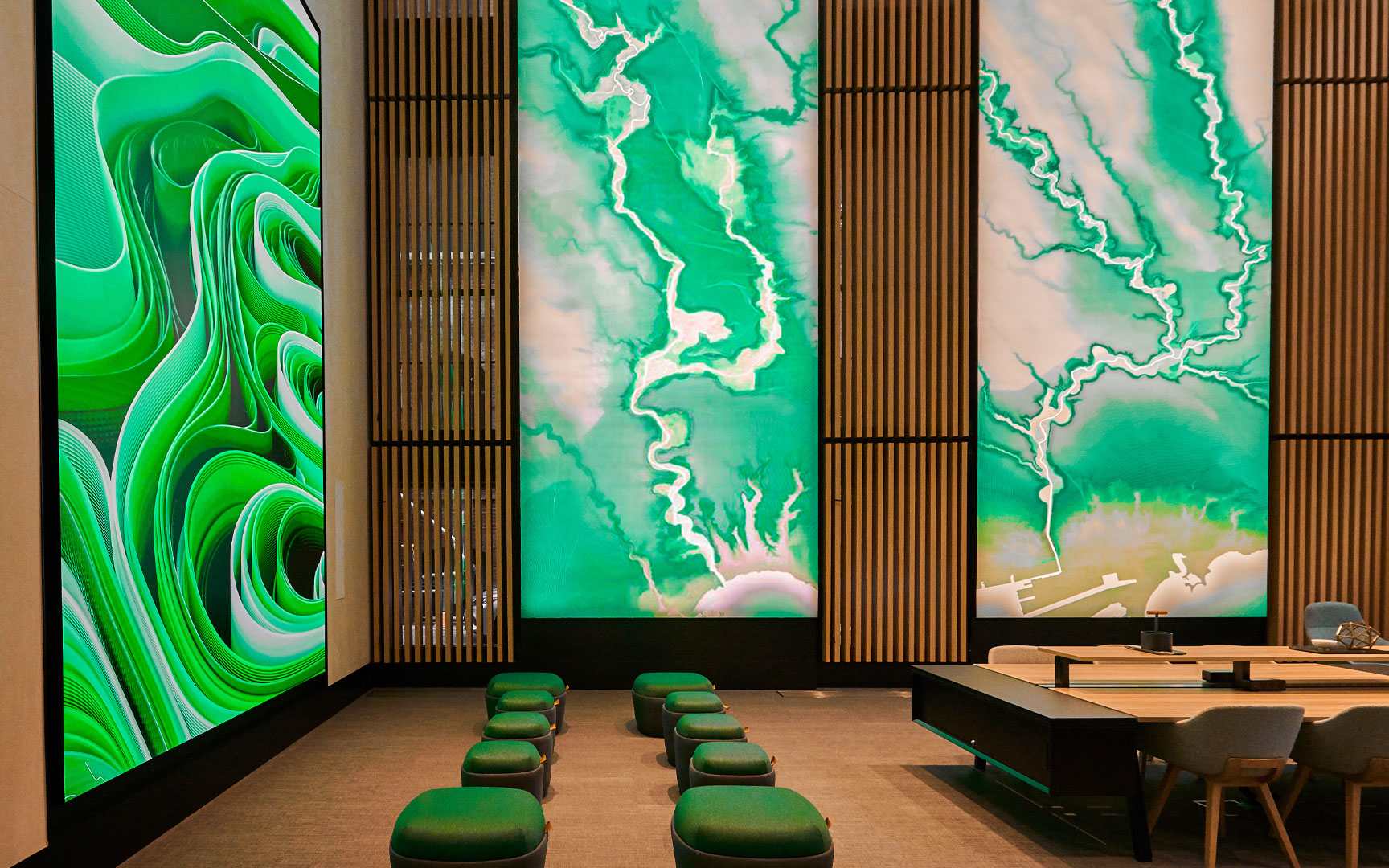
TD Bank is one of the 10 largest banks in North America. TD terrace at 160 Front Street is TD's newest Toronto office tower, a 47-storey LEED-certified building developed in collaboration with Cadillac Fairview, opened in 2024. The ground level TD Branch inside opened in June 2024, featuring large-scale digital screens, floor-to-ceiling digital art, and flexible meeting spaces. The custom lighting (supplied by Omnify Lighting) for this branch is powered by Cence Power's low-voltage DC lighting system, installed as a part of the new construction.
New construction is an opportunity to get the power infrastructure right from the start. For a flagship branch in a LEED-certified tower, the lighting power system needed to support long-term sustainability goals, minimize maintenance costs over the life of the building, and be straightforward to install.
Traditional AC lighting sytsems distribute line voltage to every fixture individually. That means the AC-to-DC drivers end up mounted inside the light boxes. When a driver fails, so does the fixture, and replacing it is a disruptive, time-consuming job. For a busy bank branch, that is a real operational cost.
Running line-voltage AC to every driver in the light box also means conduit, separation requirements, and the added complexity and cost that comes with handling line-voltage wiring in a commercial building.
Cence Power's low-voltage DC lighting system for new commercial construction moves all AC-to-DC power conversion out of the light box and into centralized LV hubs installed in an accessible location. The LED modules are fed DC power directly from those hubs. Cence Drivers or Power Modules (PMs) are easily hot-swappable without having to get into the light box for maintenance. (While Class 2 systems are designed for safe handling, all electrical maintenance is subject to local codes and the Authority Having Jurisdiction (AHJ) in your area.)
Because the system operates on Class 2 power-limited wiring, it is inherently safe at the cable level. Class 2 cables require no conduit, no separation from other low-voltage systems, and none of the code-intensive installation requirements that come from running line voltage to every driver. That simplifies the electrical installation considerably and reduces material and labour cost.
And when something eventually needs servicing, since the hubs are separate from the fixtures from the light boxes, maintenance means going to one centralized accessible location rather than working across every driver.
Lorem ipsum dolor sit amet, consectetur adipiscing elit, sed do eiusmod tempor incididunt ut labore et dolore magna aliqua. Ut enim ad minim veniam, quis nostrud exercitation ullamco laboris nisi ut aliquip ex ea commodo consequat. Duis aute irure dolor in reprehenderit in voluptate velit esse cillum dolore eu fugiat nulla pariatur.
Block quote
Ordered list
Unordered list
Bold text
Emphasis
Superscript
Subscript

Reduced Installation and Capital Costs
By eliminating the need for conduit and simplifying wiring to Class-2, the lighting installation at TD Terrace required significantly less material and labout than a conventional AC system. Reduced mechanical protection requirements mean contractors work faster and with a lighter material footprint. For a flagship branch of this scale, those savings across the full lighting scope represent a meaningful reduction in capital expenditure.
Lower OpEx
By centralizing power conversion, TD eliminates the need for licensed high-voltage electricians and specialized lifting equipment for routine service.* This shift to a Class 2, plug-and-play architecture significantly reduces the hourly cost of maintenance and removes the administrative burden of coordinating after-hours repairs or branch disruptions.
*Subject to local AHJ.
Sustainability and Decarbonization Aligned with TD Terrace's LEED Certification
TD Terrace was built to LEED certification standards, reflecting TD's broader commitment to reducing the environmental impact of its operations. With less material waste from the simplified Class 2 wiring architecture, the Cence system contributes to embodied carbon reduction goals. By integrating low-voltage DC power system for new commerical construction rather than retrofittting later, the branch avoids the additional carbon cost of a future retrofit.
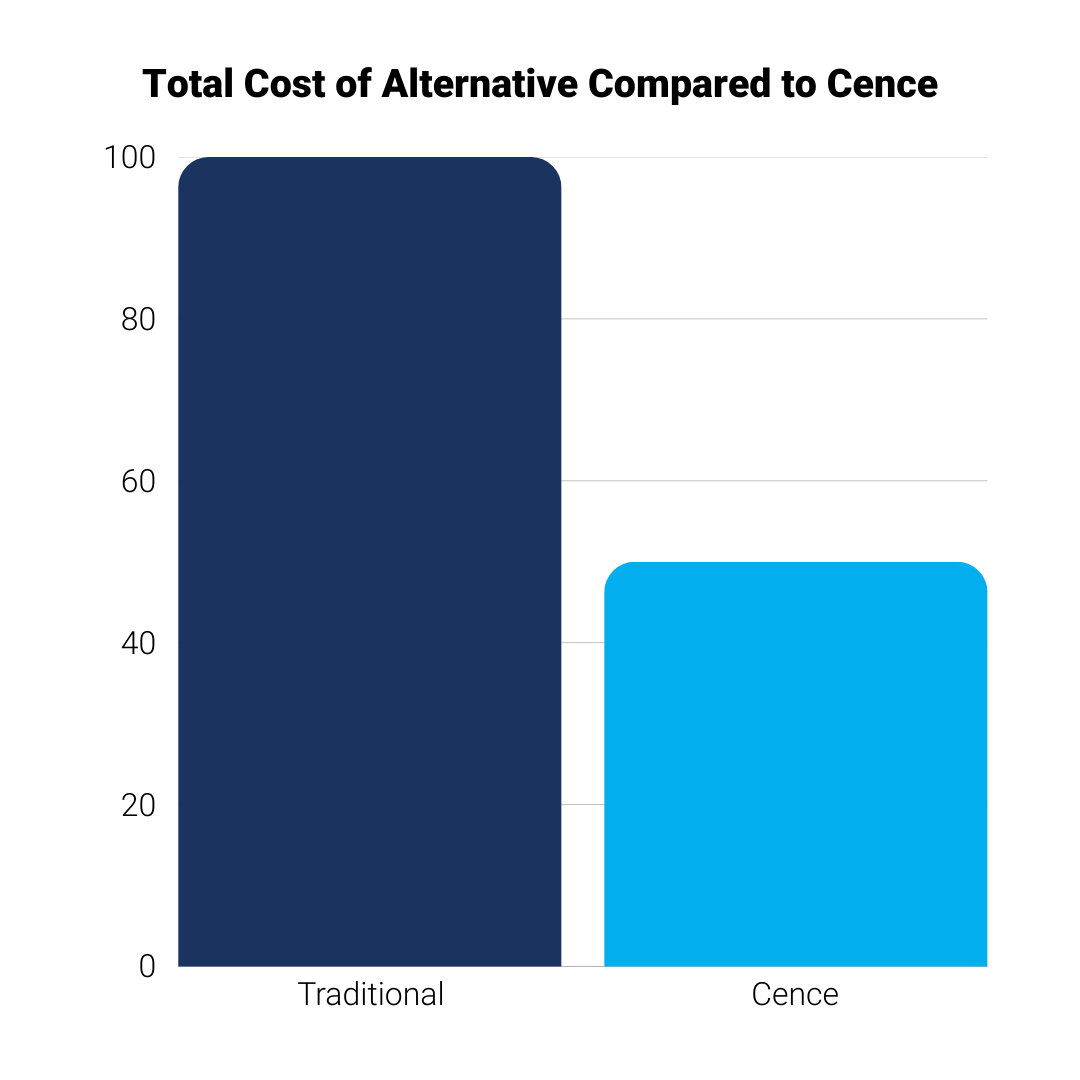
Capital Expenditure Savings (Projected)
By implementing a centralized low-voltage DC power distribution system as part of the original TD Terrace build, TD Bank moved the power conversion out of the light box into Cence LV hubs installed at an accessible location. Rather than distributing line-voltage AC to every fixture individually, the system runs Class 2 wiring from the hub directly to each fixture, removing the conduit and mechanical protection requirements of a conventional AC installation.
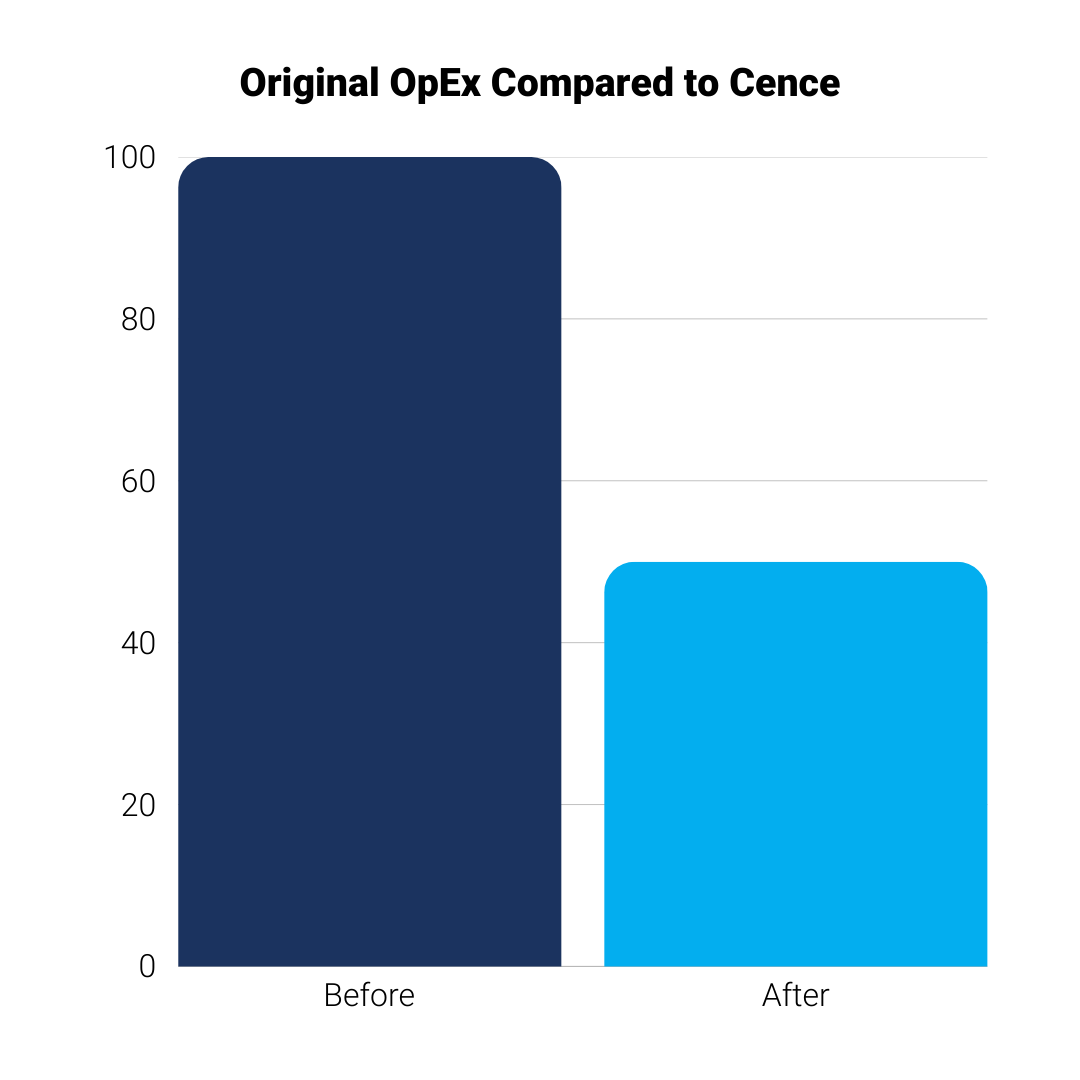
Operational Costs Savings (Projected)
The Class 2 power-limited design reduces the cost and complexity of ongoing servicing over the life of a building.
Explore how a similar low-voltage DC lighting approach was implemented at Sport chek - Etobicoke.
Gallery images courtesy of Omnify.


