
Pre-order Cence HV, our fault-managed power system here

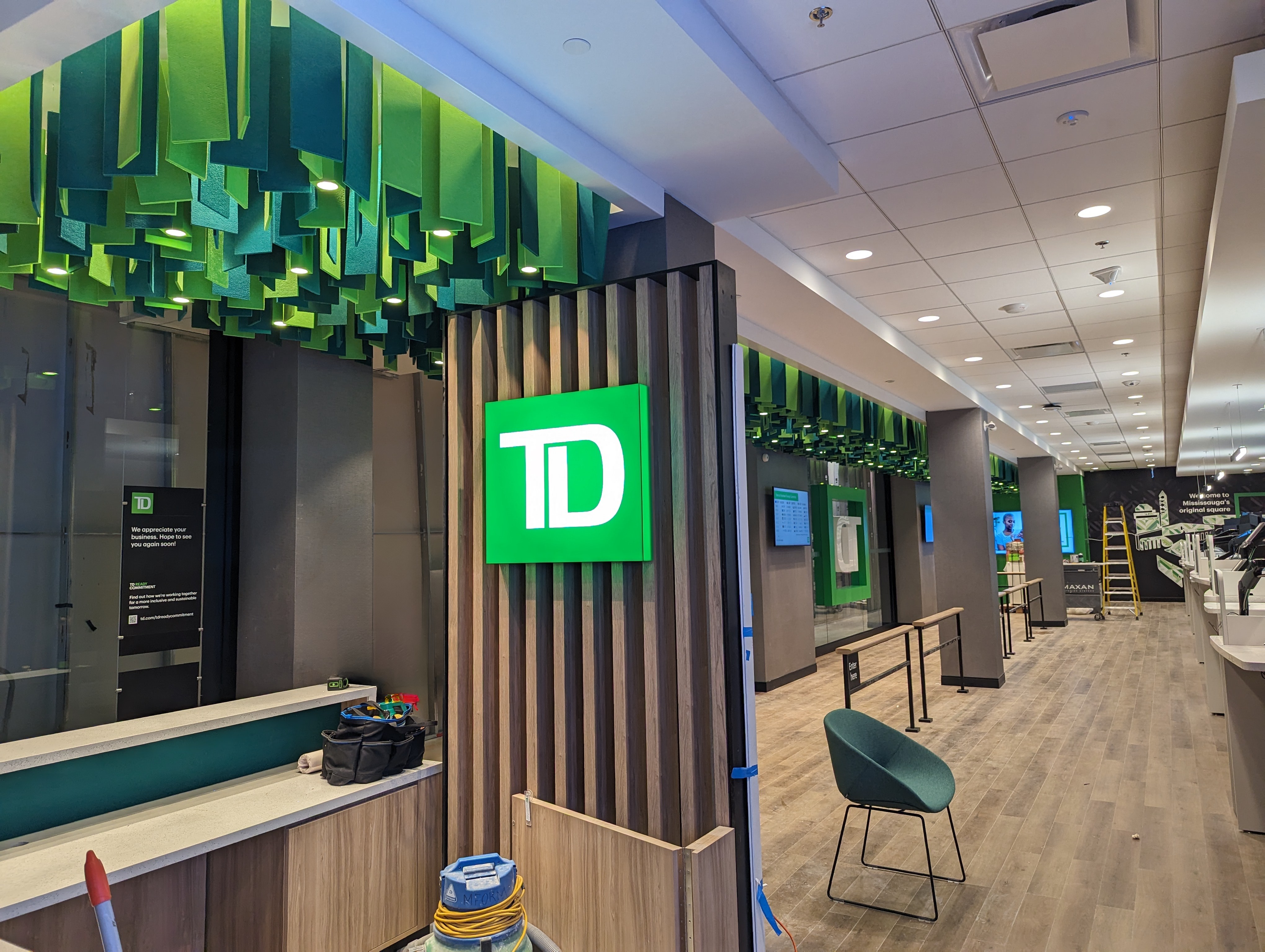
TD Canada Trust is the retail banking arm of TD Bank Group, serving more than 10 million customers through a network of approximately 1,100 branches across Canada. Among Canada’s largest financial institutions, TD has continued to invest in reimagining what a branch visit feels like, moving away from purely transactional spaces towards locations designed for deeper conversations around financial advice, education, and community.
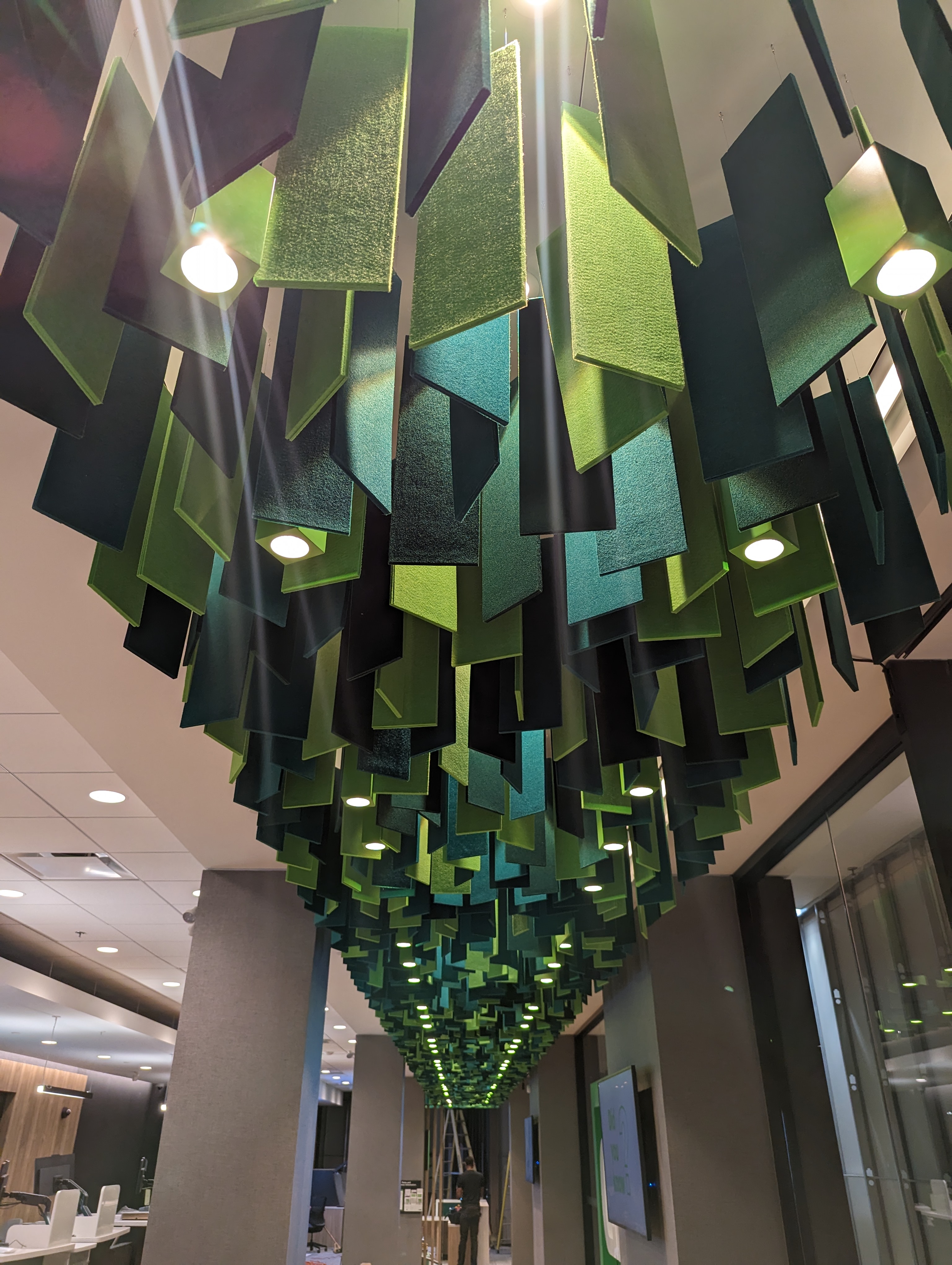
The branch’s ceiling design centres on a decorative feature built from densely layered vertical panels suspended above the entrance. Integrated within it are a large number of individual downlights, along with cove lighting washing the soffit above. That concentration of lighting loads created a specific electrical constraint, detailed below.
At first glance, the ceiling appears to be purely architectural.
Suspended across the ceiling is a dense decorative feature built from layered vertical panels, extending across a significant portion of the branch. Integrated within it are a large number of individual downlights, together with cove lighting washing the soffit above. While visually striking, the feature concentrates a high density of separate lighting loads within a relatively confined ceiling zone.
As the number of lighting loads increases, so does the infrastructure required to power, support, and maintain them. In a conventional lighting system, AC-to-DC power conversion is typically distributed throughout the installation using fixture-level drivers or remotely mounted drivers located near the fixtures they serve. At the scale specified for this project, that approach would have introduced numerous driver locations, thick copper wiring runs, junction boxes, and future maintenance points above the finished ceiling.
The project team needed a power-distribution strategy that could support the design intent without filling the ceiling space with distributed power-conversion hardware or creating unnecessary maintenance complexity over the life of the installation.
To support the architectural design while simplifying power distribution, the project used Cence’s centralized Class 2 low-voltage DC power architecture.
Rather than performing AC-to-DC conversion at each lighting load, the system centralizes conversion within the Cence LV Hub and distributes low-voltage DC power directly throughout the installation.
The Cence LV Hub converts AC power to DC once at a centralized location rather than repeating the conversion process at every fixture.
This removes the need for fixture-level drivers and consolidates power-conversion equipment into a serviceable, accessible location.
The centralized architecture is particularly well-suited to installations containing a high density of lighting points.
By separating fixture deployment from fixture-level power conversion, the system supports complex architectural lighting designs without introducing distributed drivers throughout the ceiling.
By locating power conversion equipment within the LV Hub, maintenance activities can be performed at a centralized location rather than throughout the ceiling installation. Hot-swappable power modules further simplify replacement.
Lorem ipsum dolor sit amet, consectetur adipiscing elit, sed do eiusmod tempor incididunt ut labore et dolore magna aliqua. Ut enim ad minim veniam, quis nostrud exercitation ullamco laboris nisi ut aliquip ex ea commodo consequat. Duis aute irure dolor in reprehenderit in voluptate velit esse cillum dolore eu fugiat nulla pariatur.
Block quote
Ordered list
Unordered list
Bold text
Emphasis
Superscript
Subscript

By relocating power conversion outside the fixture environment, the installation reduces heat exposure and removes a common point of failure associated with conventional lighting architectures.
Cence's centralized power architecture is designed to more than double LED fixture lifespan compared to conventional fixture-level power conversion systems.
Centralizing power conversion within the LV Hub reduces the number of power-related components distributed throughout the ceiling installation.
When maintenance is required, hot-swappable power modules allow service activities to be performed at the Hub without accessing individual lighting points throughout the ceiling.
The LV Hub performs AC-to-DC conversion at a centralized, high-efficiency location rather than repeating the conversion process throughout the installation.
This approach can reduce lighting energy consumption by up to 20% compared to conventional lighting architectures.
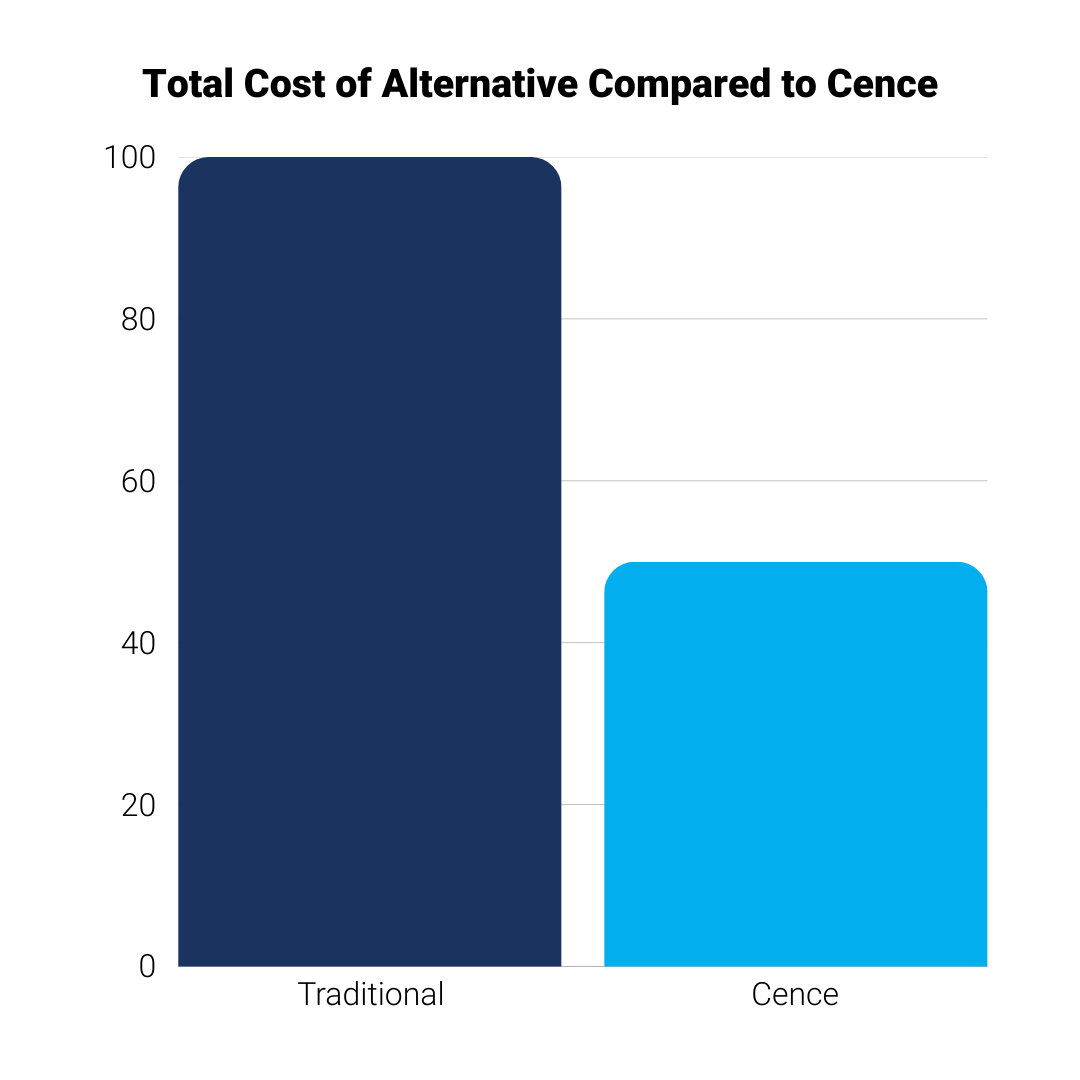
The installation uses a centralized Class 2 low-voltage DC architecture that simplifies lighting power distribution while reducing material requirements within the electrical distribution system.
Projected benefits include:
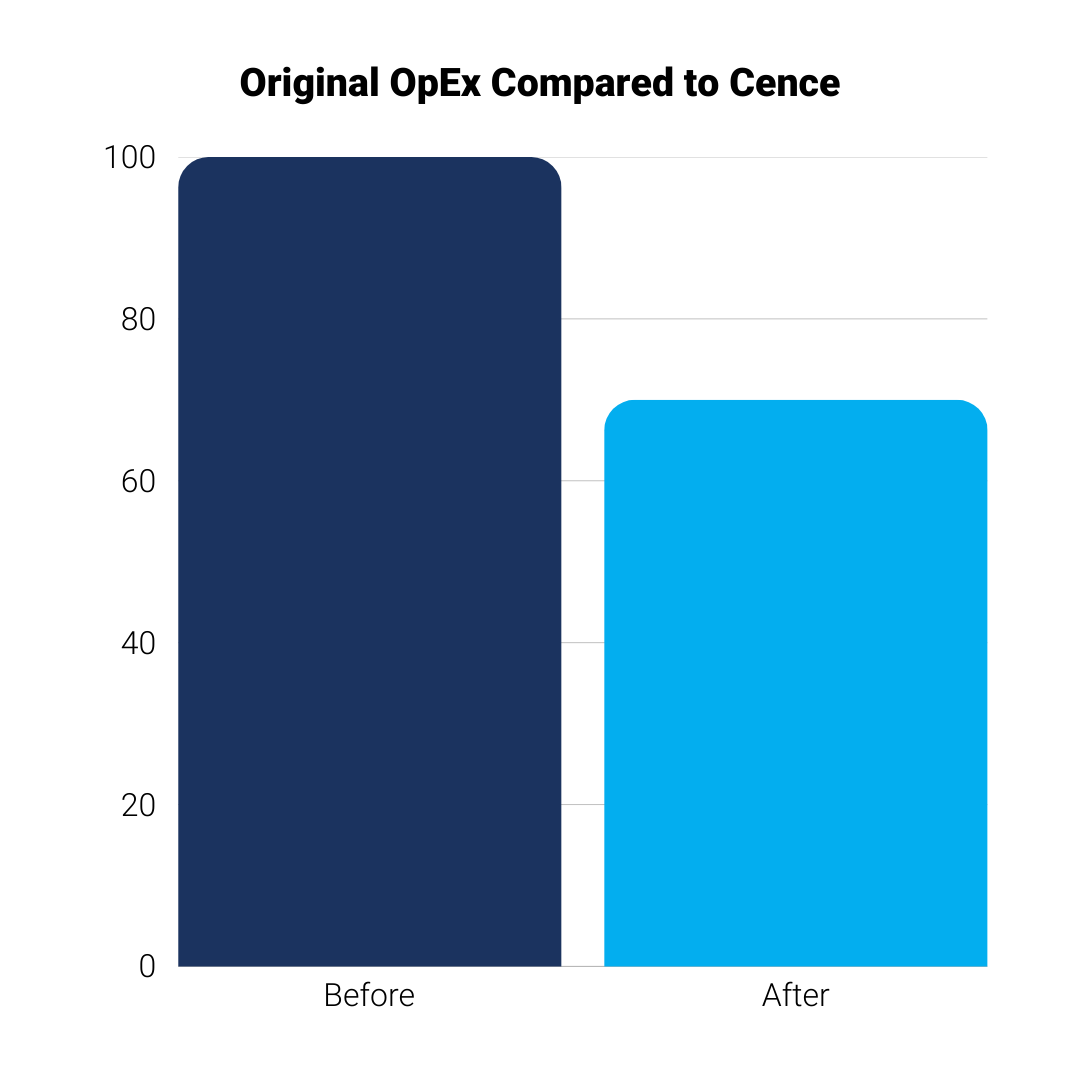
By centralizing AC-to-DC conversion and distributing low-voltage DC power directly to lighting loads, the installation is projected to benefit from:
Architectural lighting installations frequently place high densities of lighting loads into compact ceiling spaces. While the lighting design may look clean and minimal, traditional distributed power conversion creates hidden infrastructure complexity across the ceiling grid.
The Cence LV Hub simplifies this by consolidating AC-to-DC power conversion into a single Class 2 system. By delivering low-voltage DC directly to lighting loads, Cence streamlines your project from installation to ongoing operation:
The Cence LV Hub is a centralized Class 2 low-voltage DC power distribution system. The Hub converts building-supplied AC power into DC power and distributes that power directly to connected lighting loads using low-voltage Class 2 wiring.
Traditional LED systems often perform AC-to-DC conversion at individual fixture locations. Centralizing that conversion reduces the amount of power-conversion hardware distributed throughout a building and simplifies maintenance by consolidating serviceable components into a single accessible location.
Class 2 low-voltage systems are generally subject to fewer installation requirements than line-voltage branch-circuit wiring, which can reduce conduit, junction-box, and labour requirements depending on the application and local code requirements.
Instead of servicing drivers distributed throughout ceilings and fixture locations, power-conversion equipment is concentrated within a centralized Hub. Cence’s hot-swappable power modules can also simplify future maintenance activities.
Yes. The Cence LV Hub is a UL-certified Class 2 power system designed to meet applicable NEC and Canadian Electrical Code (CEC) requirements for low-voltage power distribution.
Explore how a similar low-voltage DC lighting approach was implemented at TD Bank Terrace, Downtown Toronto.


