
Pre-order Cence HV, our fault-managed power system here

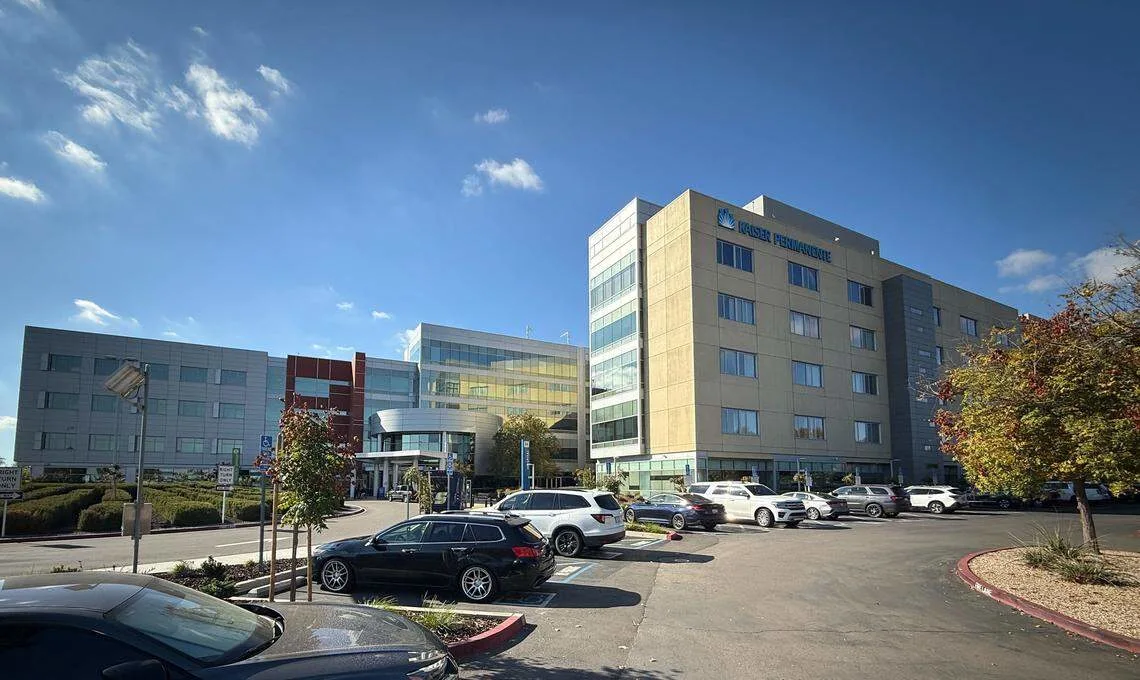
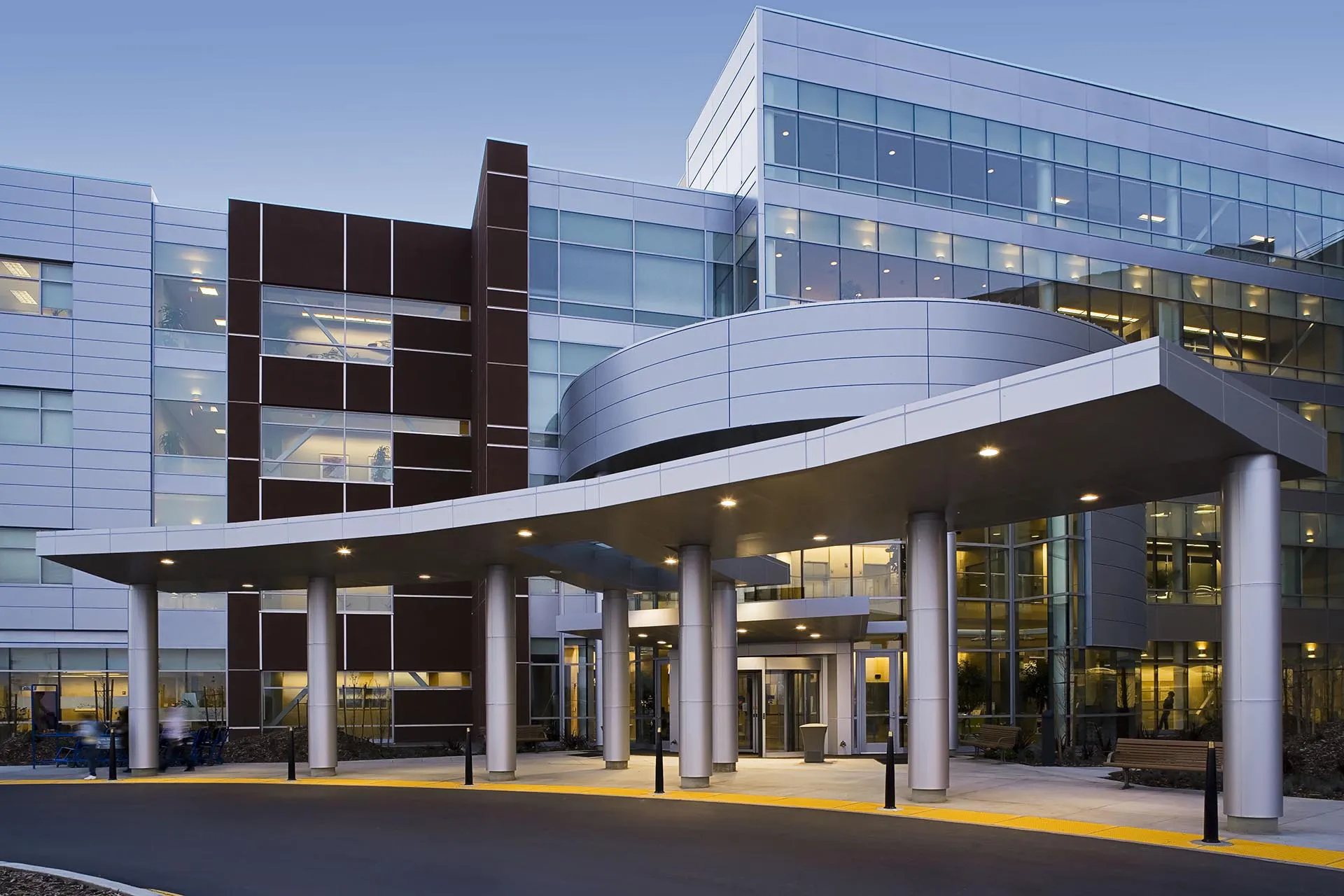
Kaiser Permanente has always viewed environmental responsibility as integral to healthcare. This philosophy traces back to Henry Kaiser himself, who installed air pollution control equipment on factory smokestacks long before regulations required it. He believed healthcare organizations should be a part of the solution, not the problem.
That commitment still shapes the organization today. The Modesto hospital facility was designed to set a new standard for healthy, low impact, high performance healthcare buildings, challenging the industry with one question: "How can you be greener than Modesto?"
The New Modesto Medical Center modernizing lighting infrastructure in their outpatient facilities is the next frontier in answering that challenge. While the original hospital set the benchmark for sustainable materials, the newly opened Modesto Medical Center (MOB) focuses on the next generation of energy efficiency. As the organization moved towards aggressive decarbonization goals, this new medical center needed a lighting infrastructure that improved efficiency, reduced embodied carbon, and simplified maintenance. This is the story of how Kaiser Permanente advanced those goals by implementing Cence Power's low-voltage DC to power the lighting in their newest facility.
Kaiser Permanente's Modesto medical center needed a lighting and power infrastructure that could support the organization's long-term sustainability and operational reliability goals. Traditional AC-based lighting posed several issues for a facility of this scale and criticality.
High energy losses and unnecessary heat generation:
Standard AC systems require multiple AC-to-DC conversions at each fixture, which increases energy waste and adds heat to the plenum, ultimately driving HVAC load.
Short equipment lifespan and high maintenance burden:
The organization needed to avoid above-ceiling servicing and the downtime associated with it since line-voltage LED drivers tend to degrade over time.
Opertaional risk in clinical environemnts:
With traditional AC infrastructure, even routine driver replacements require local power shutoffs, creating unnecesary disruption in patient-care areas.
Embodied carbon and material usage concerns:
Kaiser was targeting deeper decarbonization and reduced embodied carbon. Conventional AC wiring approaches require significantly more conduit, copper, and material, making it misaligned with their sustainability goals.
These challenges pushed the design team to look beyond standard construction practices and identify a power delivery method that improved efficiency, reliability, and long-term sustainability.
To meet these goals, Cence Class 2 Low-Voltage DC power distribution system was chosen as the foundational lighting infrastructure for the new facility. Rather than distributing 120/277v AC throughout the ceiling, the system centralizes power conversion and delivers safe, Class 2 DC power directly to lighting loads.
Key design decisions included:
Centralized Power Modules (PMs):
Instead of deploying individual AC drivers throughout the ceiling, a common source of failure in conventional systems, the project's engineering team designed the system so the power resided in a controlled, centralized hub.
Class 2 Low-Voltage Distribution:
By using Class 2 wiring for all lighting loads, the installation avoided the need for extensive conduit, reducing material requirmeents and supporting the project's embodied-carbon goals.
Hot-swappable Architecture:
The system was designed with swappable PMs to support future maintenance or capacity adjustments without interrupting clinical spaces.
Sustainability-aligned Infrastructure Choices:
Starting with a DC-based lighting design allowed the team to reduce conversion losses, simplify long-term maintenance, and support the client's decarbonization targets.
Lorem ipsum dolor sit amet, consectetur adipiscing elit, sed do eiusmod tempor incididunt ut labore et dolore magna aliqua. Ut enim ad minim veniam, quis nostrud exercitation ullamco laboris nisi ut aliquip ex ea commodo consequat. Duis aute irure dolor in reprehenderit in voluptate velit esse cillum dolore eu fugiat nulla pariatur.
Block quote
Ordered list
Unordered list
Bold text
Emphasis
Superscript
Subscript

Lower Operating Costs
By eliminating repeated AC-to-DC conversion losses and reducing heat introduced into occupied spaces, the lighting system is expected to reduce lighting-related energy consumption by up to 20% compared to a traditional AC-powered lighting system. These efficiency gains support the medical center's broader OpEx reduction goals while improving the real-world lighting performance.
By distributing low-voltage DC power directly to LED fixtures, the Modesto Medical Center is expected to achieve up to a 20% reduction in annual lighting-related operating costs. Eliminating repeated AC-to-DC conversions will reduce wasted energy and lower heat introduced into the building. As energy costs rise, this is a great way to support the medical center's ongoing OpEx reduction strategy.
Reduced Installation and Capital Costs
The simplified low-voltage electrical architecture is expected to deliver up to 40% savings in lighting-related capital expenditures compared to a traditional AC lighting system. Reduced mechanical protection requirements and the elimination of unnecessary conduit will lower material usage, shorten installation timelines, and reduce labor complexity. This approach is expected to make future expansions or space reconfigurations faster and less disruptive.
Sustainability and Decarbonization Impact
With fewer conversion losses and lower energy demand, emissions associated with lighting are expected to decrease, helping the facility meet healthcare sustainability requirements and medical center decarbonization mandates. This design supports a low-carbon healthcare strategy for the future, notably by reducing embodied carbon enabled by material efficiency and long-term systemj durability.
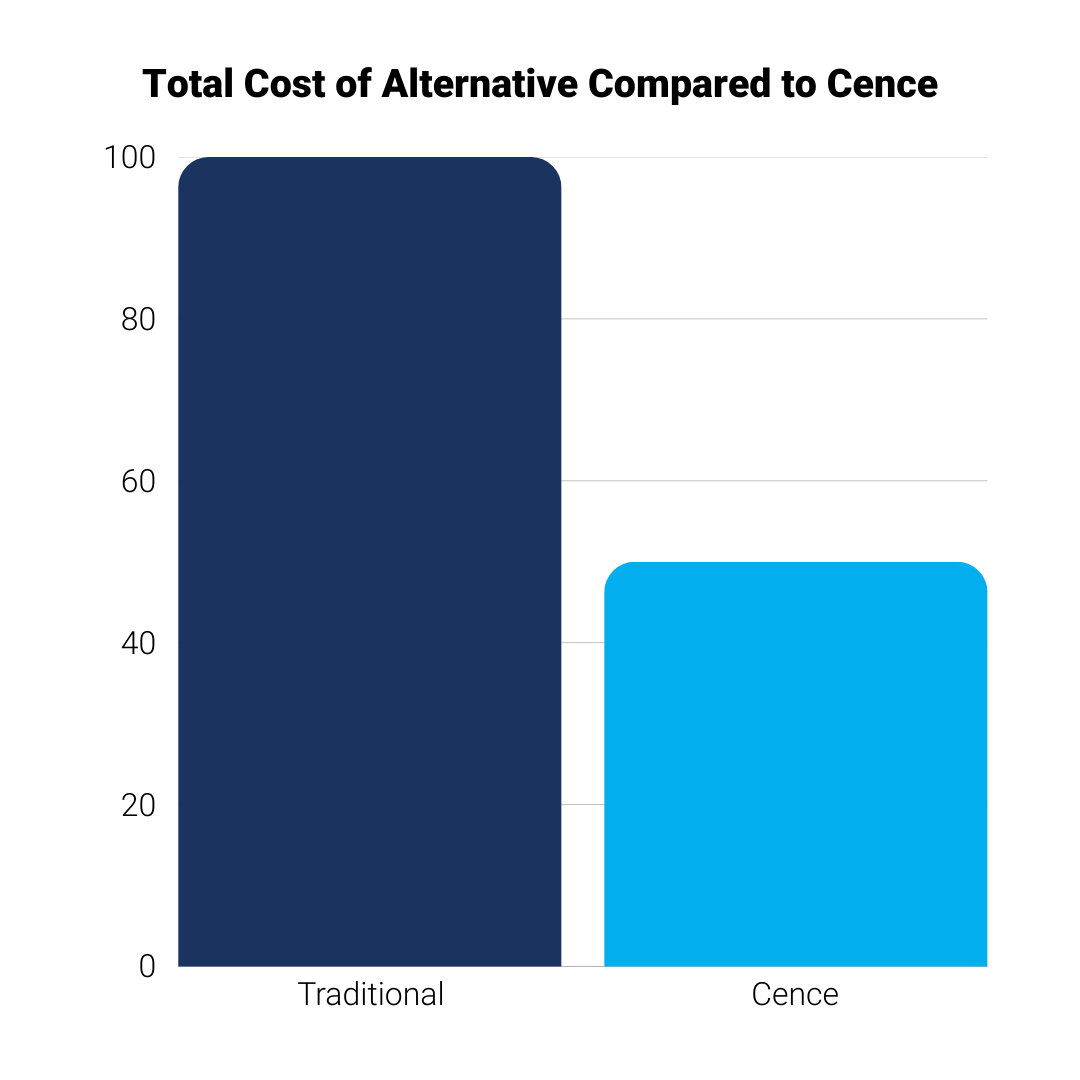
Capital Expenditure Savings (Projected)
By moving to a centralized low-voltage DC power distribution system, Modesto medical center reduces the need for traditional AC line-voltage drivers and complex conduit runs. The system allows LED lighting to be powered directly by centralized DC.
Modeled construction-phase efficiencies include:
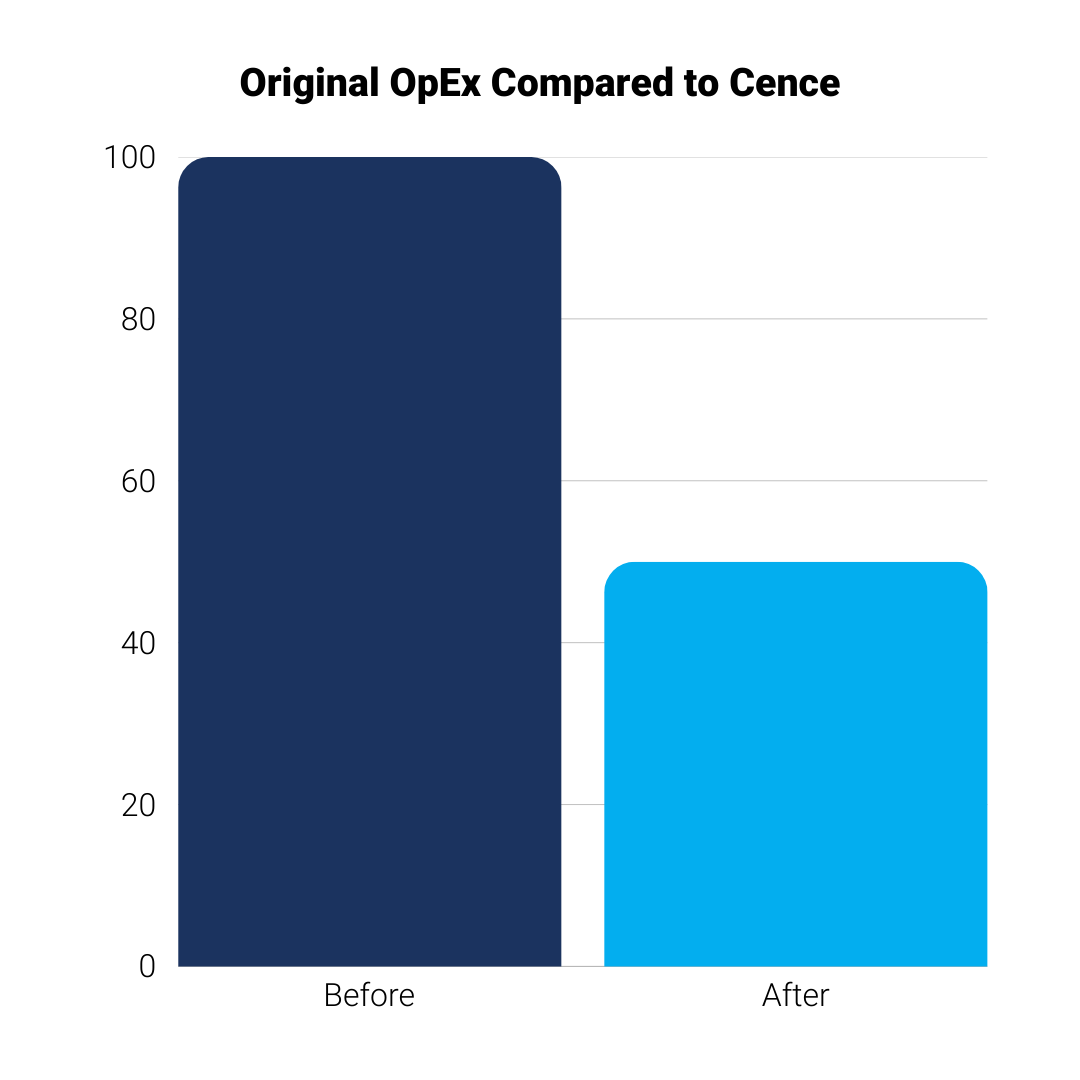
Operational Costs Savings
Direct DC power eliminates internal AC-to-DC conversion stages that typically waste energy in LED lighting. Fewer conversions also reduce fixture heat, extending LED lifespan and cutting maintenance requirements. As the building enter steady-state operation, the system is expected to support long-term operational savings through:
By combining simpler installation with energy-efficient, low-voltage design, Modesto sets the stage for long-term medical center OpEx reduction strategies - a model that can be replicated across future sites with minimal disruption. Explore how a similar low-voltage DC lighting approach was implemented at Kaiser Permanente Fresno.


